EXTREN® Reef-Urbishes the Mesocosm at the Biosphere
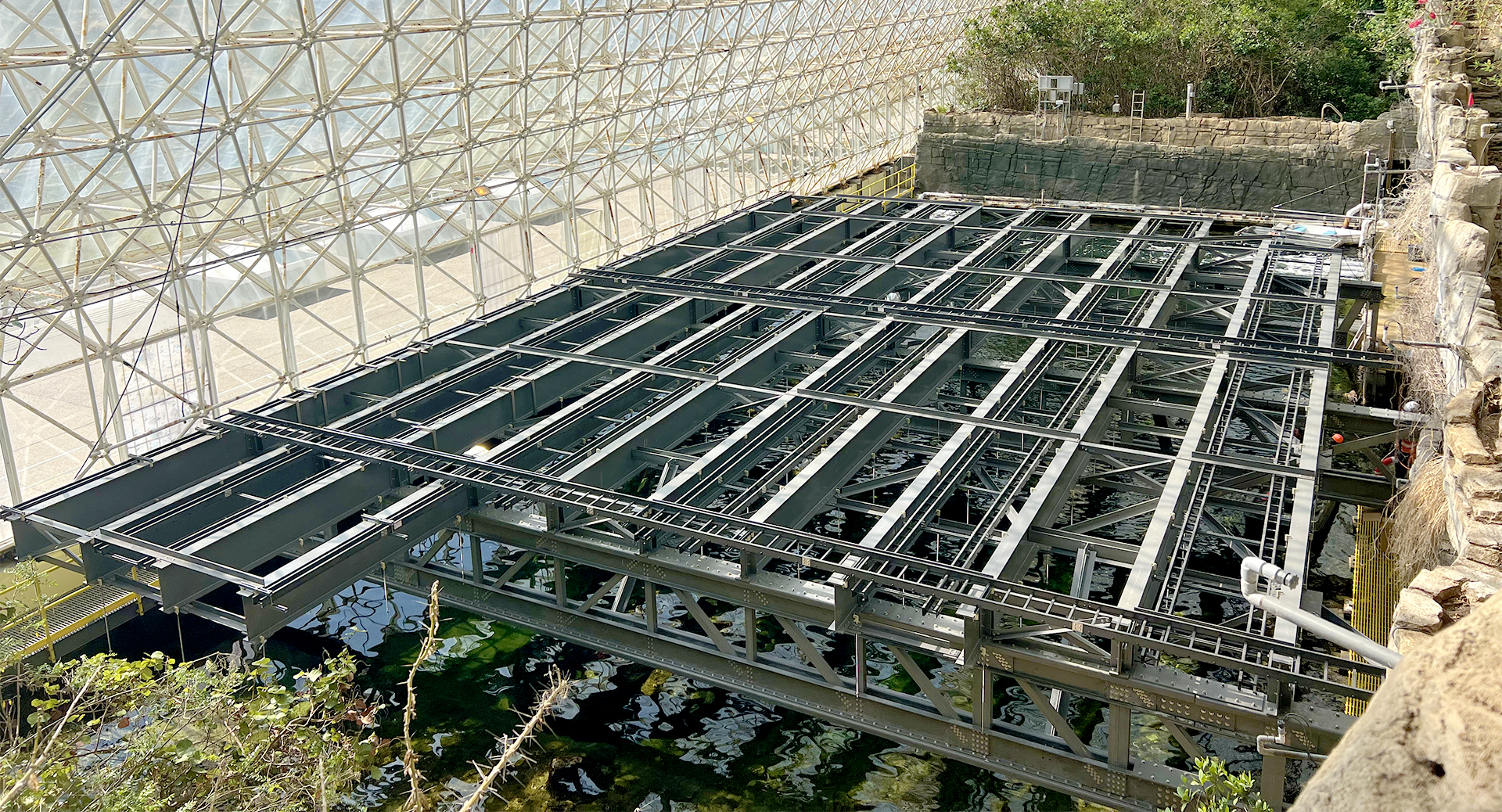

Located on over three acres of land within the Sonoran Desert of Arizona lies the Biosphere 2. The construction of the facility was originally completed in 1991. At its highest peak, the glass and steel frame structure measures 91 feet in height with the glass panels blocking most UVA and UVB radiation. Today, it is the world’s largest controlled environment used to study the effects of environmental changes on ecosystems.
Within the Biosphere 2 ecosystem is the Marine Mesocosm, a million-gallon ocean system designed to replicate the environment of a reef in the Caribbean. Supported with mechanical systems, it has been used to demonstrate how oceans have responded to environmental changes during the ice ages, periods of global modernization, and the future. Over the decades, scientists have been collecting data on the rates of photosynthesis and calcification on the ocean ecosystem.
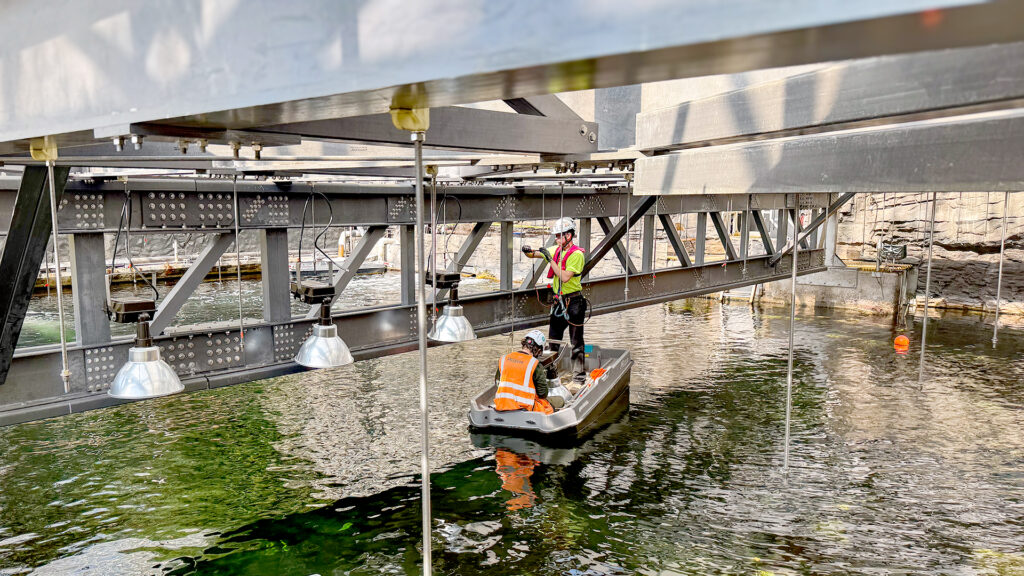
Today, the system is undergoing a multinational revitalization effort to discover the best ways of scaling coral reef solutions. Over 60 aquatic species have been introduced into the tank in efforts to study best practices to implant and rebuild critical coral reef infrastructure.
| TECHNICAL DATA |
|---|
| Product: Coral Reef Habitat Lighting Truss System |
| Process: Pultrusion, Fabrication |
Materials & Sizes:
|
| For: Frost Engineering & Consulting |
| User: University of Arizona Biosphere 2 |
To do so, lighting plays a critical role in inhibiting algae growth. The current location of the structure is drastically different in latitude than the Caribbean. To supplement environmentally accurate lighting for the raceway-created reef systems, the tank required an addition of almost 300 halogen and LED lights with a structure capable of supporting the wiring, equipment, systems, and accessibility requirements.
Frost Engineering and Consulting was sourced by the owners to design and deliver a 4,000 square foot lighting truss system combining EXTREN® with stainless-steel columns, baseplates, and anchorage. In total, the system is made up of three 60-ft long, 6-ft deep built-up and field spliced pultruded FRP trusses with 24-inch-deep girt beams and cantilevered catwalks. Frost Engineering abided by the requirements of the IBC (International Building Code), City of Tucson, and the provisions of ASCE 7, ACI 318, AISC 360, and ASCE 74.

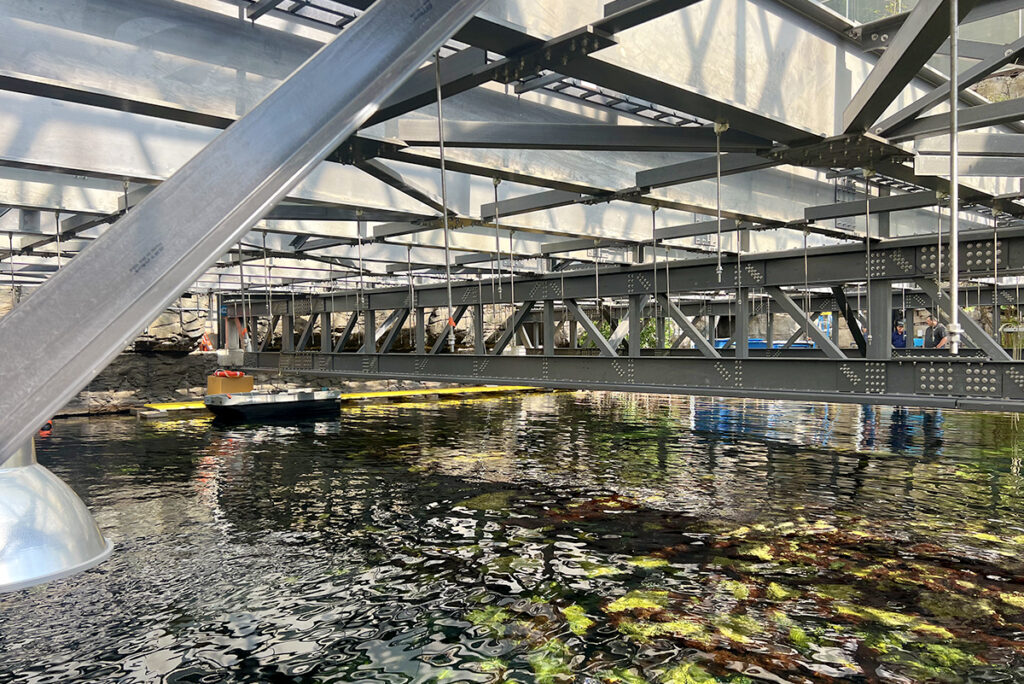

From design launch to installation, the project timeline was completed in under 18 months with full installation completed by the second quarter of 2025. The material upgrades coupled with abiotic systems will ensure decades of maintenance free service for the Marine Mesocosm.
You must be logged in to post a comment.