FRP Amps Up Sheet Piling
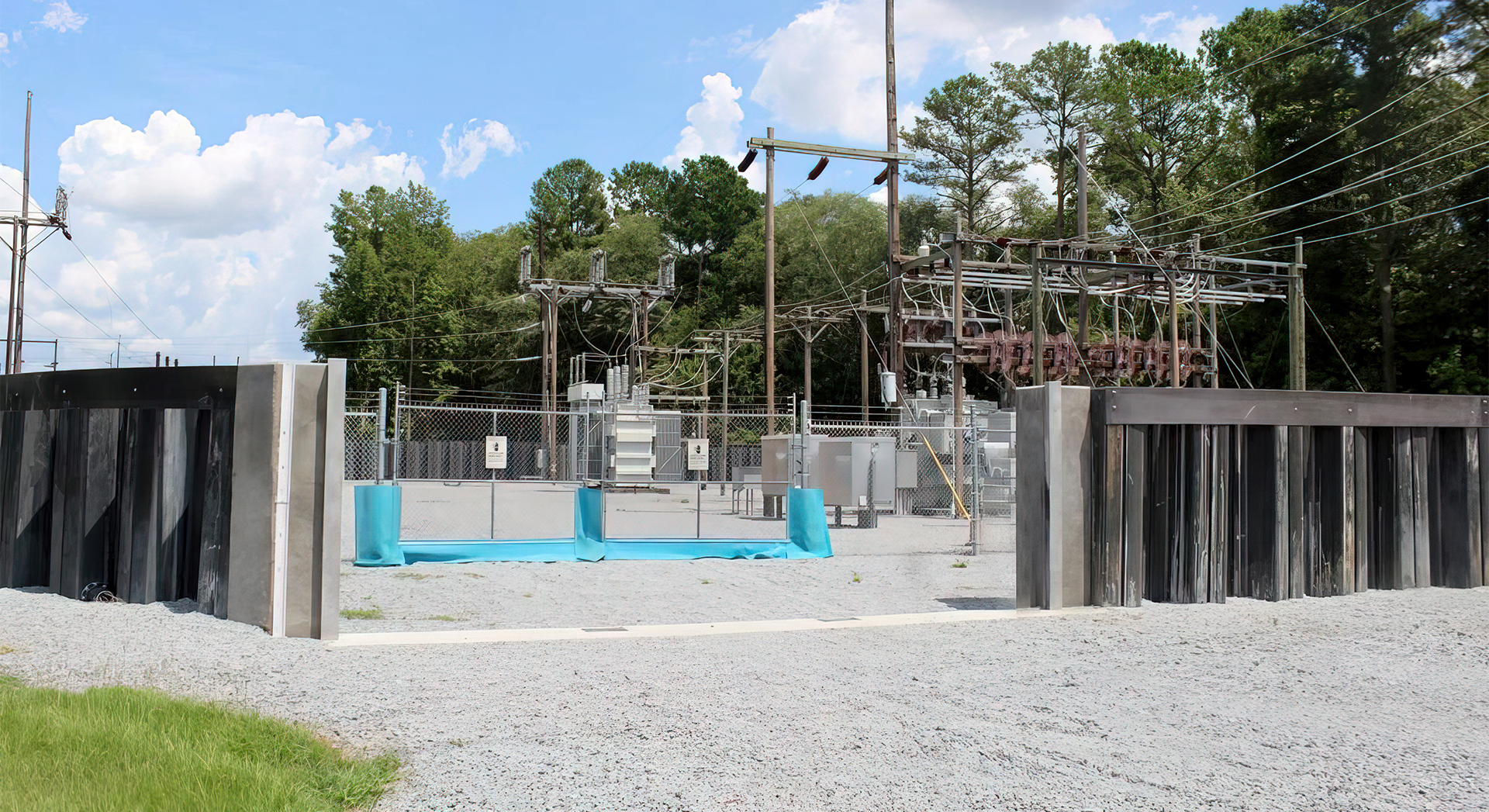
The coastline of North Carolina was hit with a one-two punch combination of Hurricanes Matthew and Florence just two years apart. Hurricane Matthew caused substantial flooding in the Lumber River Basin, reaching peak river heights of 28 feet in some areas. Hurricane Florence dumped over 30 inches of rain and caused the Lumber River basin to reach a peak height of 29 feet. Record levels of rainfall with flooding damaged major arterial roadways and interstates.
In addition to making thoroughfares impassable, the superstorms disrupted power distribution throughout the region as substations were either washed out or submerged, leaving thousands of residents without power for extended periods – in some cases, more than a month.
| TECHNICAL DATA |
|---|
| Product: Substation Flood Wall |
| Process: Pultrusion |
Materials & Sizes:
|
| For: CMI Limited Co. |
| User: A major utility provider in North Carolina, USA |
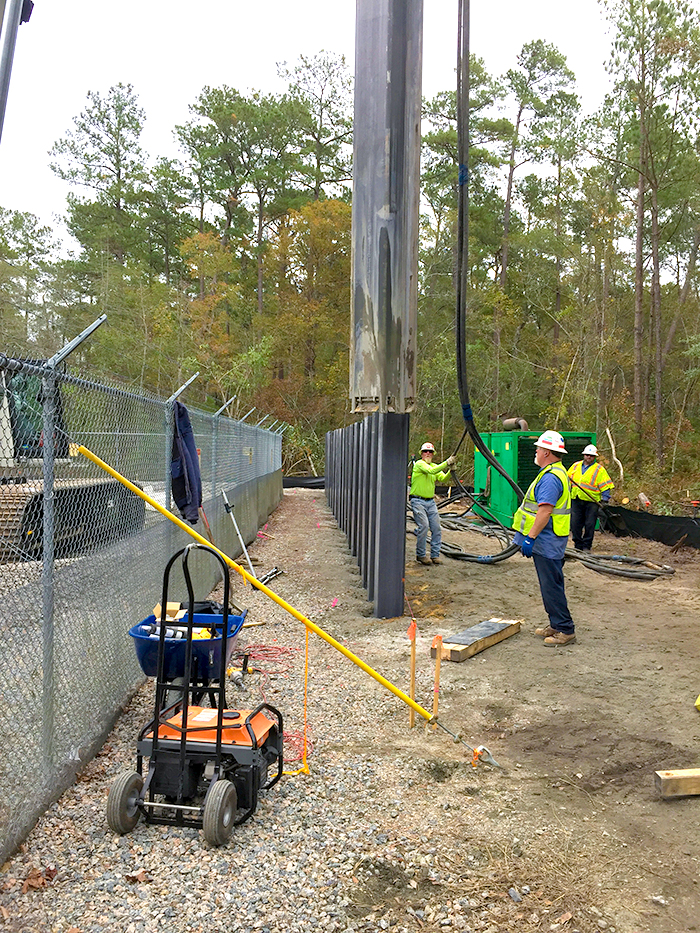
A major utility provider in North Carolina investigated flood protection solutions for the foreseeable future and examined long term solutions to shield against flood waters and block seepage. Steel sheet piling was initially examined, but price volatility, corrosion, installation costs, and safety concerns were burdensome. The utility turned to CMI for a permanent solution to protect against flood waters during the rebuilding process. CMI was able to provide quick installation schedules with materials capable of withstanding harsh weather conditions and guidelines provided by USACE’s (United States Army Corps of Engineers) Design Guide for I-walls on Flood Walls.
UltraComposite™ 75 Sheet Piling, manufactured by Strongwell, was sourced for several separate substation sites along the coastline of North Carolina. With aggressive project schedules, UC-75 was deemed far superior to steel or concrete in life cycle analyses, non-conductivity, sustainability, and total cost of ownership. At each substation site, sheet piling provided wall lengths ranging from 600 to 1,900 linear feet. Wall heights varied from six to eight feet above grade with tight spacing requirements around each substation.
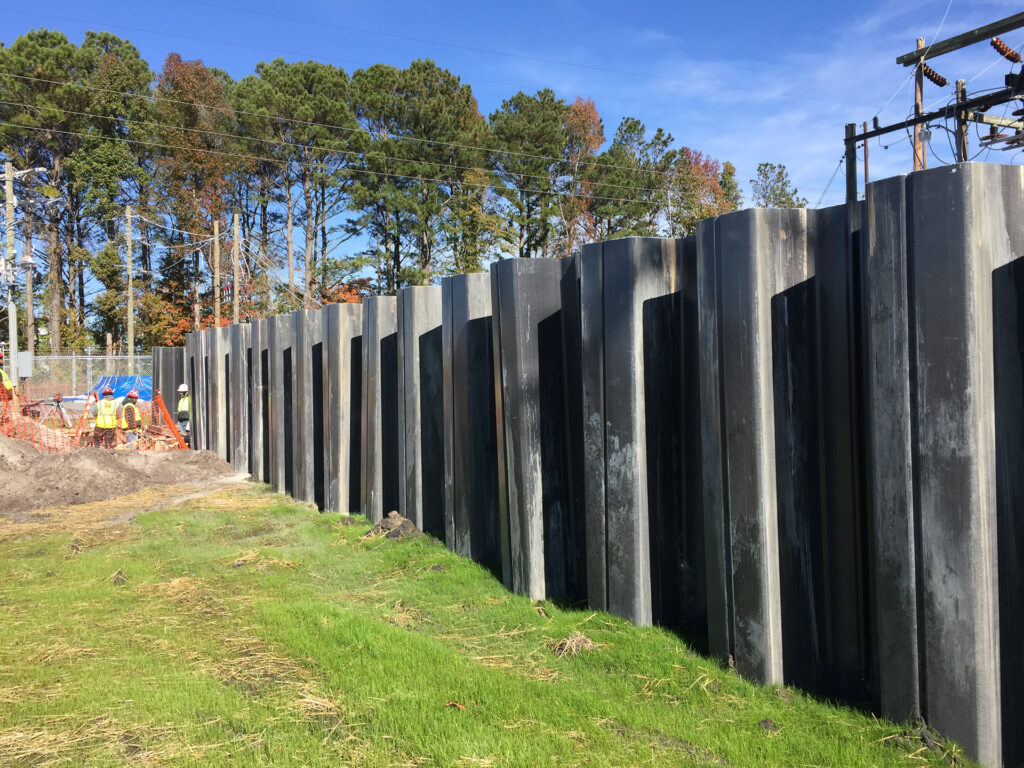
Today, the substations are outfitted to resist the onslaught of future superstorms along with the aftereffects of making landfall. The engineers of record on this project, contractors, and utility company were all pleased with the design, material specification, shipping logistics, and installation experience during the site installations and expect the area to be far better prepared for the next major storms and more resilient in their aftermath.
You must be logged in to post a comment.